
Grey nomads and the true cost of the big lap
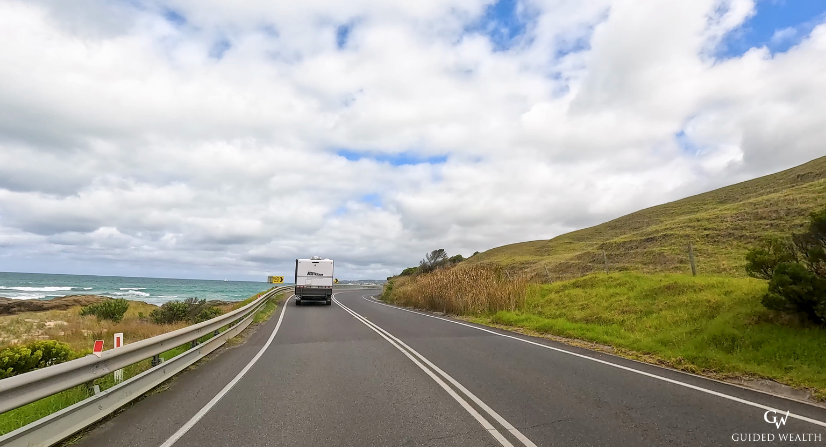
For many grey nomads leaving Melbourne, the big lap begins with a run west to Adelaide, the first leg of a loop around the coast that follows the better weather and the services along the way. Some take the Great Ocean Road past Lorne, Apollo Bay and the Twelve Apostles before crossing the border near Mount Gambier, a slower and more scenic start. Others, particularly those towing larger vans, take the more practical inland route through Ballarat, Horsham and Bordertown. Plenty go out one way and come home the other, months later, at the end of a full circuit of the country that many people plan for years before they finish work.
It's very much an older traveller's pursuit. Australians aged 55 and over account for around a third of all caravan and camping trips, and 41% of all nights spent on the road, according to the Caravan Industry Association.
Most of the planning tends to go into the van itself. Much less goes into what a year on the road will cost once it's underway, and how that sits alongside the rest of a retirement plan. Both are worth working through before the keys change hands.
The costs that are easy to see
The van and tow vehicle are usually the largest single outlay, and they're often funded from a super lump sum or cash savings set aside for the purpose. A well-equipped new caravan can cost well over $100,000 before the tow vehicle is considered. Unlike the family home, both start losing value the day they're driven away, so the money spent on them is better thought of as part of the cost of the trip than as an investment that will come back at the end of it.
Fuel is the other obvious cost, and this year it's been far less predictable than usual. Prices rose sharply after the conflict in the Middle East escalated in late February. By the end of September, the average diesel price across the major cities was around 60% higher than in February, according to the ACCC's weekly monitoring, and regional prices were higher again at about $2.88 a litre.
Towing a large van can push fuel use close to 20 litres per 100 kilometres. At that rate, a 15,000 kilometre lap would use around 3,000 litres of diesel, which at current regional prices comes to roughly $8,600. That's before side trips, and before any further movement in prices.
The costs that are easier to miss
The less visible costs are the ones that tend to stretch a travel budget, and they're easier to plan for before departure than to discover along the way.
Running two homes at once. Council rates, water, energy supply charges and maintenance at home continue while you're away, alongside everything the van costs to run.
Home and contents insurance. Most policies require you to tell your insurer if the house will be unoccupied for 60 days or more, and cover can be reduced or refused if you don't.
Insurance, registration and roadside assistance for both the van and the tow vehicle.
Tyres, servicing and repairs, which tend to cost more and take longer in remote areas where parts have to be freighted in.
Site fees. Free and low-cost camps help, but popular caravan parks in peak season now commonly charge $70 to $100 or more a night.
Groceries in remote towns, which can cost noticeably more than at home.
Trips home for a family event, a new grandchild or a medical appointment, along with the cost of storing the van while you're gone.
A simple way to bring all of this together for a trip of six to twelve months is to split the budget into three parts. The first is the one-off set-up, including the van, the tow vehicle and any fit-out. The second is the cost of keeping the home running while it sits empty, which most people can estimate from their current household spending. The third is a weekly figure for life on the road, covering fuel, sites, food and day-to-day spending, multiplied by the number of weeks away. Adding a contingency of 10 to 15% to that weekly figure allows for an unexpected repair, or a decision to stay somewhere longer than planned.
What the trip means for the Age Pension and your home
For anyone receiving, or close to receiving, the Age Pension, a long trip raises a few further questions.
The caravan counts as an asset under the Assets Test at its market value, the same as a car or a boat. Spending savings on a van doesn't take that money out of the Assets Test. It's still counted, just as the van's value rather than as cash, and that value falls as the van ages.
The family home generally remains exempt while you're temporarily away, but only for up to 12 months. After that, it's no longer treated as your principal home and its value is counted as an asset, which for most homeowners would reduce or cancel the Age Pension. For a trip planned to run close to a year, or one that might be extended, the timing of the return home matters.
Some travellers rent out the home while they're away to help fund the trip. The net rent is then counted under the Income Test. For tax purposes, the ATO's absence rule generally allows a former home to keep its main residence exemption from capital gains tax for up to six years while it's rented out, provided no other property is treated as your main residence over that period.
It's also worth letting Services Australia know your plans and expected return date before leaving, along with any change in how the home is being used.
None of this needs to stand in the way of the trip. Many people approaching retirement find it difficult to spend savings that took decades to build, even on something they've looked forward to for years. Working through the true cost beforehand tends to make that easier, because the trip becomes a known amount rather than an open-ended expense. Once the numbers are done, the big lap is no longer something to feel uneasy about spending on. It's something the plan has already made room for.
References
Caravan Industry Association of Australia, Industry Statistics, updated 8 September 2026.
Australian Competition and Consumer Commission, Weekly fuel price monitoring report, 2 October 2026 (prices to 30 September 2026).
RAC, How to save money on fuel when towing your caravan, March 2026.
CHOICE, How to make sure your home is still insured while you’re on holiday, 25 March 2026.
YourLifeChoices, The great Australian road trip is being priced off the map, 23 June 2026.
Department of Social Services, Social Security Guide 4.6.5.10, Assessing personal effects, household contents, vehicles and cash.
Department of Social Services, Social Security Guide 4.6.3.60, Exempting the principal home, temporary vacation of property.
Department of Social Services, Social Security Guide 4.3.8.30, Income from real estate.
MLC Technical Services, Homeowner status and the principal home, 1 September 2025.
Australian Taxation Office, Treating former home as main residence.